For local businesses
Somebody asked to leave solar information by your counter
Here is exactly what that is, what it costs you, and what we will and will not do with the space you gave us.
The short version
A small stand of flyers and cards about solar, near where your customers already wait. It costs you nothing, needs nothing from your staff, and somebody comes back periodically to restock and tidy it.
Nobody sells at your customers. The cards carry a code; anyone curious scans it in their own time, on their own phone, and nothing happens unless they choose to ask.
What the stand is
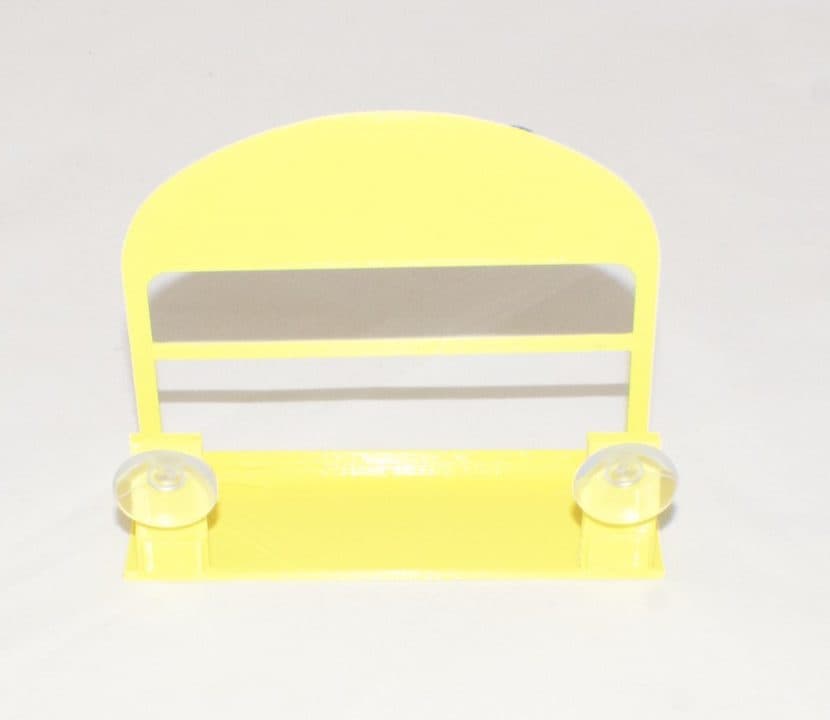
A flyer and business-card holder, printed in biodegradable PLA. It pins to a corkboard, takes suction cups or magnets for glass and metal, or simply stands on a countertop — whichever suits the space you have.
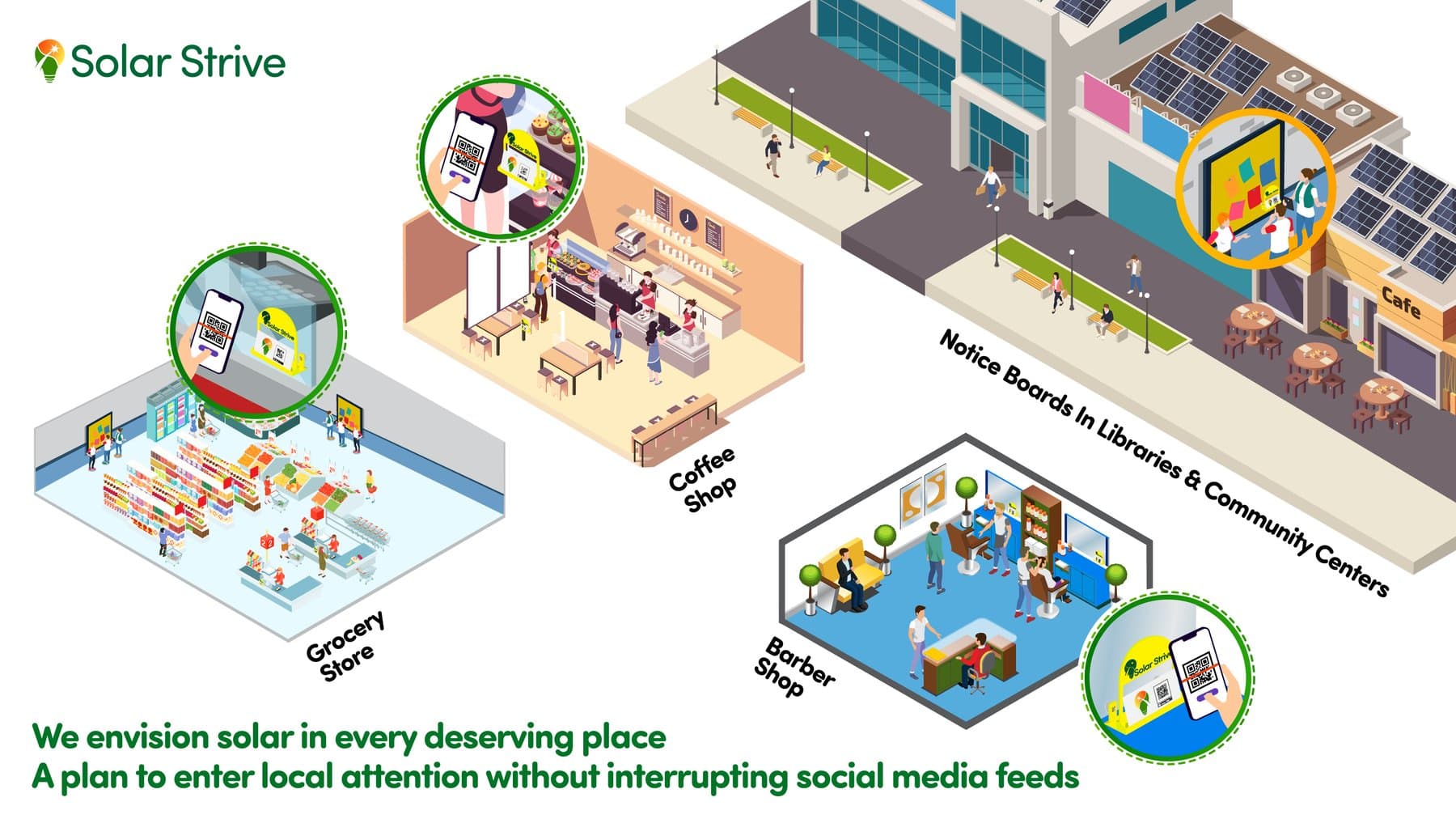
The idea is not ours. Community boards in coffee shops, grocery stores, and libraries have always been where local information actually reaches people, and they work because nobody is being interrupted. A waiting chair has idle eyes; we are just putting something genuinely useful in front of them.
The printed codes are specific to your location, so a question that starts on your counter can be credited to whoever placed it there. The code identifies the placement. It does not identify your customer, and we never learn who picked something up.
Where it mounts
- Cork Board
- Window Display
- Magnetic Surface
- Counter Display
Where it works best
- Coffee shops, bakeries and barbers — anywhere people wait with nothing to do.
- Hardware stores and garden centres, where somebody is already thinking about their house.
- Libraries and community centres with a noticeboard.
- Waiting rooms: garages, clinics, salons.
The common factor is dwell time. Somewhere people stand still for a minute beats somewhere busier where they do not.
What we ask of you
A real yes from a real person
Someone with the authority to say it — an owner or a manager — and we record their name. A stand that appeared while nobody was looking is not a placement, it is litter.
You choose the spot
We ask where you would like it, rather than telling you where it goes. If it is in the way, it is in the wrong place.
Tell us when it needs to move or go
No notice period, no conversation to have. Say the word and it is gone. A host who feels stuck is a host we should not have had.
What we will not do
- Sell anything to your customers, or stand in your shop trying to.
- Knock on doors in your neighbourhood under our name.
- Ask you for a fee, a commitment, or a contract.
- Ask you for anything about your customers. We never see who picked a card up.
- Claim your business endorses solar, or us. The stand is information, not a testimonial.
Who keeps it stocked
We do. Someone from our field team comes back to count what has gone, restock, and straighten the display. The starting cadence is roughly every three weeks, and we will adjust it once we can see how fast materials actually move at your place — a stand people ignore does not need visiting fortnightly, and one that empties in a week does.
Cards and flyers are counted separately, which is the only way to learn which format people actually pick up. That is the whole of the data collection: two numbers and a date.
If you would rather look after it yourself, say so and we will leave you extra materials instead of calling in.
What about your own roof, or your parking area?
Three things decide whether a building or a lot is worth a professional look: whether it is shaded across the middle of the day, which way the surface faces, and how much electricity is used on site. Commercial flat roofs and open parking do unusually well on all three, which is why they come up so often.
We cannot tell you what yours would produce — we are not licensed to and we do not pretend otherwise. We can put you in front of somebody who can.
Ask about a commercial property →Saying yes
If somebody is standing in front of you, just tell them — they will record your name and where you want it, and that is the whole process. If you found this page on your own, use the contact form and mention that you would like to host. Tell us the business, the kind of spot you have in mind, and who to ask for.
That second link is the guide our field team carries — the conduct rules, and the list of things they are not allowed to say. It is public on purpose: if someone approaches you on our behalf, you should be able to check what they were told.